| Another
Review at MyShelf.Com | ||||||||||||||
|
by Cecilia Chiang The subtitle of this book flags the most amazing thing about it, because while there are enough recipes inside (and very good ones) to justify calling it a cookbook, the really unique and amazing aspect is the story the author tells of her life. Particularly her life in China as a member of an upper middle class family and the picture it gives of a place and time we in the western world have had little access to, presented by someone who has lived in both worlds enough to know best how to help us bridge that gap. Such as the fact that Cecilia's mother came from the time when women's feet were bound. The author explains how it was done, interspersing occasional references in her story to how it affected her mother's day-to-day life when Cecilia was a child, some of which we could have guessed. But what would never have occurred to most of us was how having bound feet might affect her mother's life in a later China under Mao, when on top of the increasing and inevitable physical effects as she aged (e.g. circulation problems), the bound feet immediately and permanently branded her as a former member of the aristocratic elite, in a place and time where that was not a good thing to be. As to the food and recipes, it's not really exaggerating to say that Cecilia Chang changed how Americans think about Chinese food and "eating Chinese." Through her San Francisco restaurants (a business she got into by accident), back in the 1960s when eating Chinese generally meant chow mein and egg drop soup, she introduced us to modern day standards like pot stickers and hot and sour soup. She also ran destination restaurants, with elegant settings and gracious service, rather than the stereotype that lives on today where eating at a Chinese restaurant is assumed to mean having to deal with abrupt-to-the-point-of-rude service in a cheapish setting that is either dingy or painfully gaudy. The recipes in the book include some made famous by her restaurants, along with some that I'll still enjoy eating but will probably never make myself because of the work involved, but they also include a number of easy, "home cooking" dishes. Dishes such as a basic dish of baby bok choy (an underrated vegetable Cecilia and I share a passion for) or a simple stir fry of beef and snow peas. The recipes are written for those with access to Chinese ingredients to go with a taste for authenticity and fresh ingredients, rather than those who mostly prefer to pour a jar of pre-made sauce over some frozen veggies in a skillet, but that doesn't make them all difficult. Getting a taste for the real thing just might wean you off that jar forever. Highly recommended, for her story even if you never try a single recipe. |
|
|||||||||||||
©
2010 MyShelf.com |
||||||||||||||
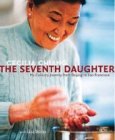 The Seventh Daughter