| Another
Review at MyShelf.Com | ||||||||||||||
|
by Jeffrey Overstreet When I opened the pages of Jeffrey Overstreet's Auralia's Colors, it was to one of the longest opening sentences I've ever read in modern fantasy literature, but I was instantly hooked. Overstreet's rich, poetic language drew me into a world of fresh characters, new landscapes, and an inventive theme, which could be aptly applied to contemporary society. Auralia's Colors is the first book in Overstreet's new Auralia's Thread series. It is alternately called The Red Strand. Overstreet is a well-known film critic and author of Through a Screen Darkly, a chronicle of what he calls "dangerous" cinema. His move into fiction, especially the fantasy realm, is unexpected, though he claims to have been spinning tales since he was a boy. His wife, a poet, may be the muse who has spurred his appreciation of colorful description and perhaps inspired his creation of the new words he has coined for this volume. This first book in the series introduces readers to Auralia, an orphan found by the Gathers, outcasts of the kingdom of Abascar. She has an extraordinary gift of finding colors in nature and imbuing them in objects she makes for her outcast friends. In a society that values artists, this would be a grand talent, but in Abascar, color is restricted to only the ruling family. This wasn't always so in Abascar. An ambitious, jealous queen claimed color for the royal house, casting the rest of the world into shades of grey, in the Wintering of Abascar. Beautiful things were only to be made for the king and queen. Auralia's talent threatens this paradigm, and elaborate plots are crafted, at first to persuade her to use her talent for the king, and later to hide her away. Auralia only wants to do what she feels she was meant to do, to create beauty. When she is brought before the king, she sets the final red strand into a colorful cloak she is wearing, and it makes all of the colors come alive. When the king asks her who sent her to flaunt color this way in front of him, she makes reference to the Keeper, a being said to live in myth or in children's dreams. It is clear that whatever Auralia makes awakens something inside people's hearts and souls, and it troubles those whose hearts and souls are the darkest. What happens to her and to the kingdom is unexpected and full of adventure, but is also richly moving. Overstreet has created a poetic parable about the Arts. Auralia echoes the path of artists of all stripes. She sees the world differently than most, and because of that vision lives apart from society. She needs to create because, for her, to create is to live, and she must share the works of her hands with others. She also found a great freedom and connection with all creation when she made art, especially when she made things for those she loved. I found Auralia's Colors to be a potent illustration of the power of the Arts not only to enrich our lives but to transform us. We need beauty in our lives because we, too, can connect with creation by making art or viewing it. Bravo, Jeffrey Overstreet! I can't wait to read the next book, The Blue Strand: Cyndere's Midnight. |
|
|||||||||||||
©
2008 MyShelf.com |
||||||||||||||
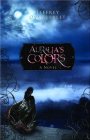 Auralia's Colors